Electricity is one of the largest controllable costs for Central Valley processors, and California’s rates, demand charges and time-of-use pricing make every kilowatt count. Some of the fastest savings don’t come from new equipment at all. They come from controlling the motors you already have more intelligently.
Why variable frequency drives save so much
Many fans and pumps run at full speed all the time, with dampers or valves throttling the flow. That’s like driving with one foot on the gas and the other on the brake. A variable frequency drive (VFD) slows the motor down to match what the process actually needs.
For centrifugal fans and pumps, the physics works strongly in your favor: power drops roughly with the cube of speed. Running a fan at 80% speed takes only about half the power of running it at full speed. On equipment that runs long hours, the savings add up quickly.
Good candidates
- Aspiration and dust collection fans in hulling and shelling plants
- Cooling tower fans and process water pumps
- Glycol, chilled water and CIP supply pumps
- Air compressors with widely varying demand
- Conveyors that don’t need to run at full speed all the time
Smarter controls multiply the savings
Control to the process, not a fixed speed. Pumps that hold a pressure setpoint, or fans that follow temperature or airflow, use only what’s needed.
Shut things off when they’re not needed. Interlocks and schedules in the PLC can stop equipment that tends to be left running during breaks or idle periods.
Manage peaks. Staggered starts and load shedding can reduce demand charges. Soft starting with drives also avoids the inrush current of across-the-line starters.
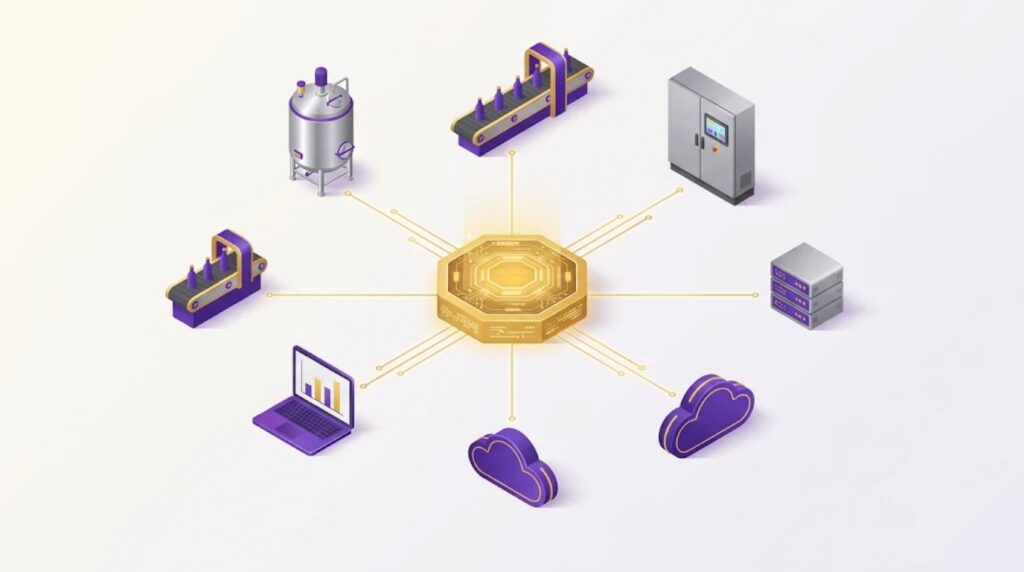
Measure it. Modern drives report power and energy. Bringing that data into SCADA shows exactly where the energy goes, and proves the savings.
Where AI comes in
Once energy and process data are being collected, AI-based analytics can find patterns people miss, such as equipment that runs when production is idle, or setpoints that could be relaxed without affecting quality. Some newer systems can even suggest when to shift flexible loads to cheaper rate periods. Like any AI tool, it depends on good data, which starts with networked drives and a solid control system.
Check for incentives
Utilities and energy-efficiency programs sometimes offer incentives for VFD and controls upgrades. It’s worth checking with your utility before you start, since many programs require approval before the work is done.
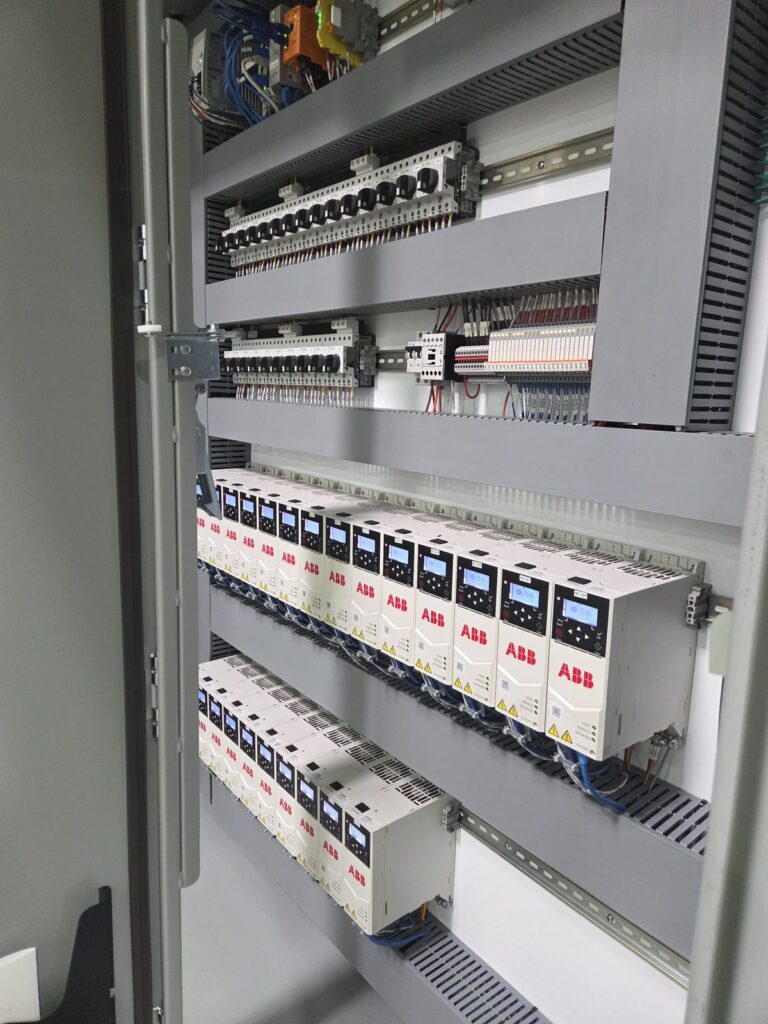
Pacific Coast Automation designs and builds drive panels and motor control systems, and programs the controls that make them efficient. Contact us to talk about where your plant’s energy is going.
Want a quick estimate for your own fan or pump? Try our free VFD energy savings calculator: enter the motor size, run hours and flow profile, and it shows the kWh a drive would save compared with throttling.