Over the past six weeks, attackers have broken into refrigeration controllers at hundreds of European supermarkets and put the cases into defrost mode overnight. The first wave hit France on October 11. According to BleepingComputer, an estimated 250 to 350 French stores were affected. A second wave on November 2 reached more than 115 stores in at least six countries. NBC News reported that retailers in Belgium, Ireland, Sweden, the Netherlands, Luxembourg and Estonia had to pull chilled and frozen product.
On November 5, CISA, the FBI, HHS, USDA and the Department of Transportation published a joint fact sheet, US Government Partners Urge Hardening Industrial Refrigeration and Cold Chain Monitoring Systems. It warns that the same activity targets cold storage and refrigerated transport worldwide, not only grocery stores. The agencies list three ways in: authentication bypass, arbitrary code injection and weak configurations. Once inside, an attacker can push units into continuous heating and defrost cycles, or hide the real temperatures from operators.
Why this matters beyond the grocery store
In the Central Valley, refrigeration is process equipment. Nut processors hold product in cold storage. Produce packers run pre-coolers and forced-air tunnels. Wineries depend on glycol chillers for fermentation temperature control and cold stabilization. Dairies and food plants run ammonia systems that dozens of people rely on every shift.
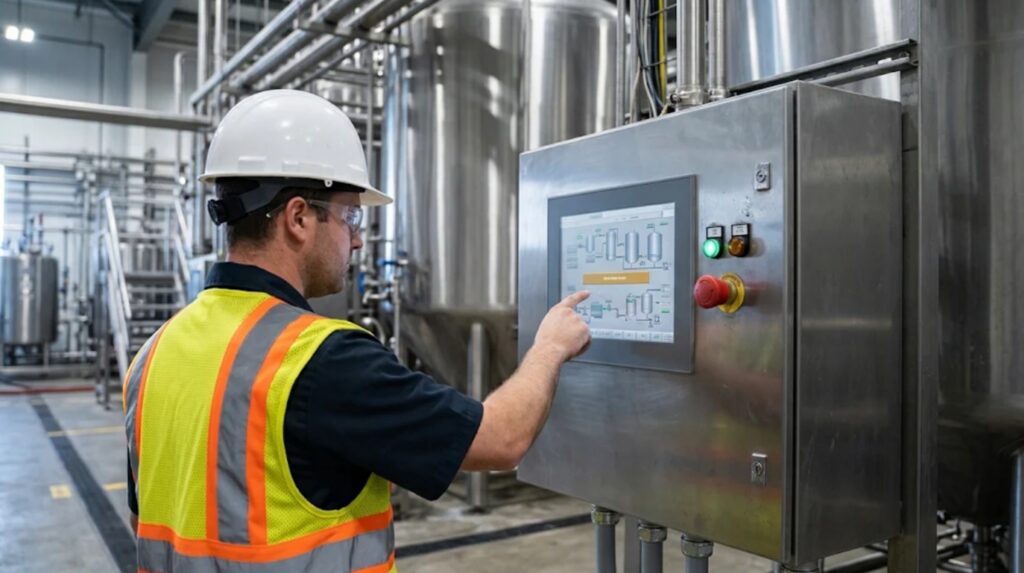
Many of these systems were installed by a refrigeration contractor, not the controls team. The controller often has its own web page, its own cellular modem or port forward for the service tech, and a password nobody on site has changed since startup. It may sit on the same flat network as the PLCs (Allen-Bradley, Siemens, Schneider, Mitsubishi, Omron, AutomationDirect) and the SCADA server (Ignition, AVEVA, FactoryTalk, WinCC, iFIX) that run the rest of the plant. That makes it both a target on its own and a way into everything else.
Exposure is still widespread. CNBC reported Censys research finding that internet-exposed refrigeration controllers from two major makers fell 53 percent between October 9 and November 5. More than 3,100 were still reachable, and Censys could not tell how many were actually fixed rather than simply taken offline. One security executive told CNBC, “It’s going to get worse before it’s going to get better.”
What to check this week
The federal fact sheet lays out the mitigations clearly. Here is how we would apply them in a processing plant, in order:
- Find every refrigeration and temperature controller. Walk the engine room, cold storage, chillers and reefer docks. List each controller, gateway and monitoring box with its firmware version and IP address, and note how the service company connects to it.
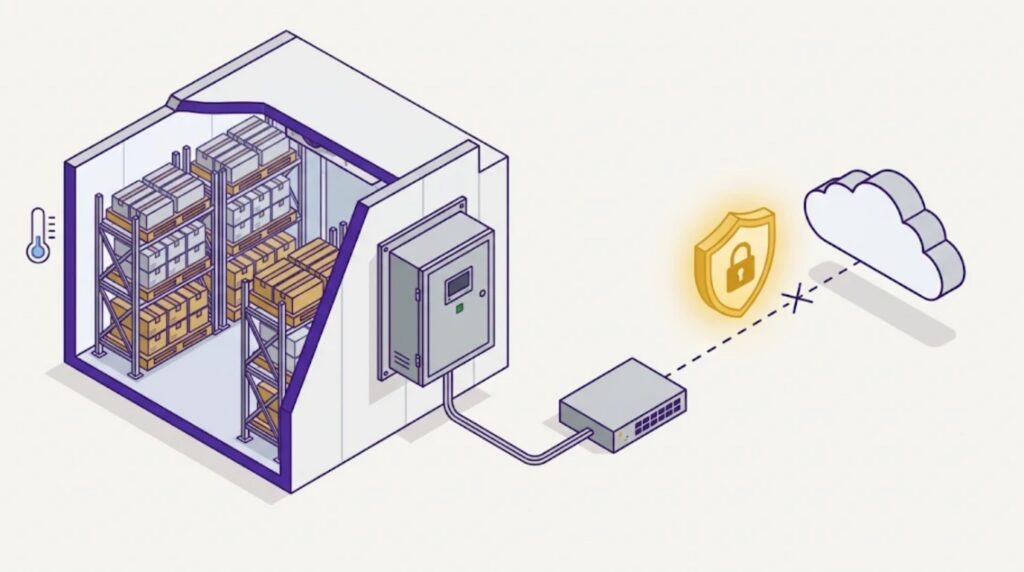
- Take it off the internet. Look for port forwards, public IPs and vendor cellular modems. Have someone outside your network test whether the controller’s login page can be reached. If it can, close it today. Remote service should come through a managed, logged remote access gateway that you can switch off.
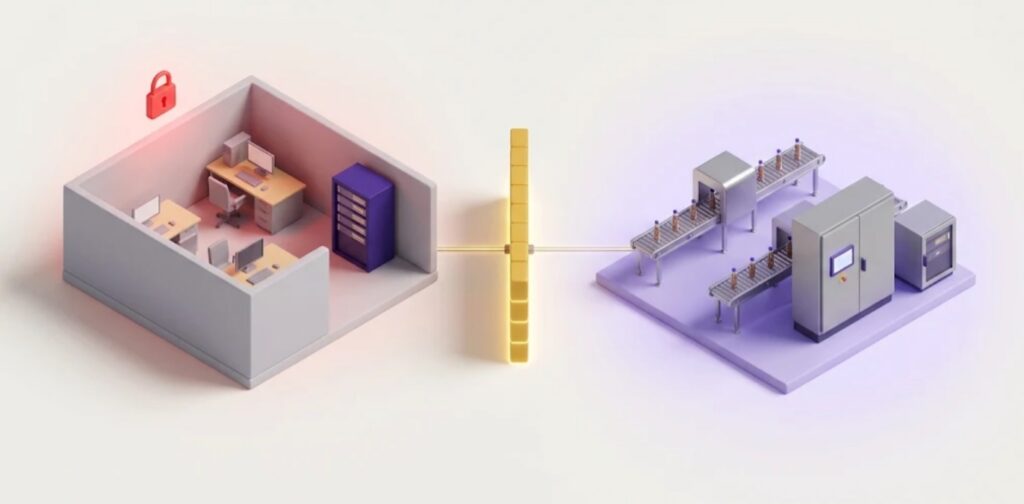
- Segment it. Put refrigeration on its own OT VLAN behind a firewall, as the agencies recommend. Allow only the specific hosts that need to talk to it, such as your SCADA server and historian, and only on the ports they use.
- Fix credentials and firmware. Change default and shared passwords. Apply current firmware, and plan to replace controllers the manufacturer no longer supports. According to the incident summary on Wikipedia, two of the controller models named in the European attacks reached end of life years ago.
- Add independent limits and alarms. The fact sheet calls for reasonable setpoint limits and alerts on deviations. In practice, put hard limits in the PLC or controller so a remote change cannot command an unsafe setpoint. Use a separate temperature sensor that alarms through your SCADA system or a cellular alarm dialer, so you still see the real temperature if the controller is lying.
- Back up and log. Save the controller configurations offline and test a restore. Turn on whatever logging the device supports, and watch network traffic where it does not log anything.
Plan for the bad night
In Europe, the attacks ran overnight, when stores were closed and nobody was watching the cases. A plant should ask the same questions. If a cold room starts warming at 2 a.m., who gets the call? Can that person put the system in manual and hold temperature without the network? Is the procedure written down at the panel?
Local manual control, hardwired high-temperature cutouts and an alarm path that does not depend on the compromised device are not new ideas. They are what keep a cyber incident from becoming a product loss. Food safety teams already treat temperature records as critical under FSMA, so they should help write this plan.
How PCA can help
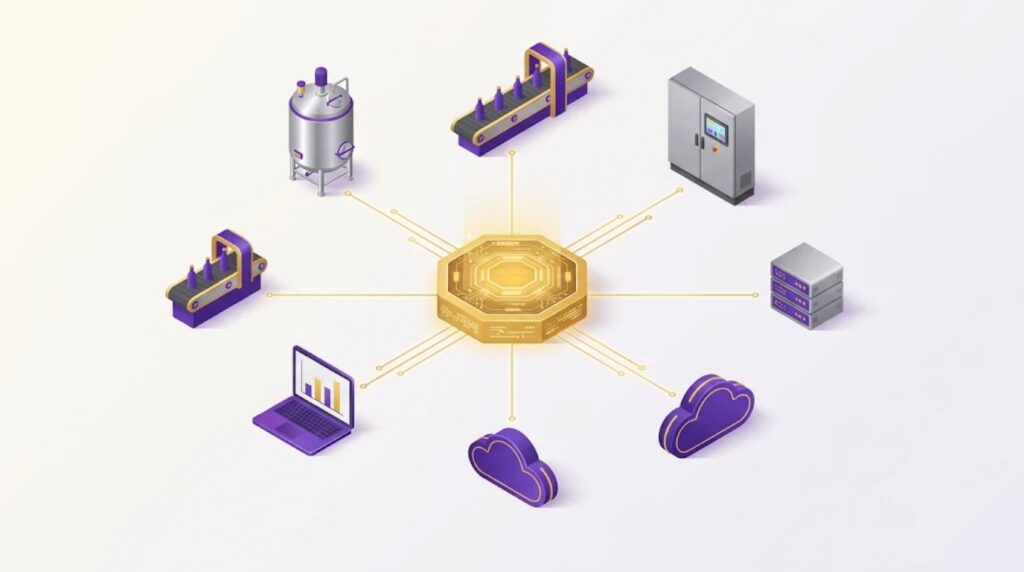
We inventory and segment plant networks, put refrigeration and chiller controls behind secure remote access, and add independent temperature monitoring and alarming to the PLC and SCADA systems you already run, on every major platform. As an Ignition integrator and AutomationDirect SI Direct partner, we also design and build control panels and upgrade end-of-life controls. Contact us