On November 16, 2026, Dragos published its Q3 2026 industrial ransomware analysis, and one finding should change how plant teams think about downtime. Dragos counted 1,266 ransomware incidents against industrial organizations from July through September, up 11% from the prior quarter, yet it found no case where an attacker directly manipulated a control system. The plants that stopped running stopped because the IT, ERP and virtualization systems they depend on went down.
For food and beverage, the trend is pointed in the wrong direction. Dragos tallied 90 incidents in the sector last quarter, up from 70 the quarter before, and it cites a July attack that suspended production at four U.S. dairy facilities for roughly 11 days. Manufacturing as a whole made up 69% of all industrial victims.
Your PLCs Can Be Fine and the Line Still Stops
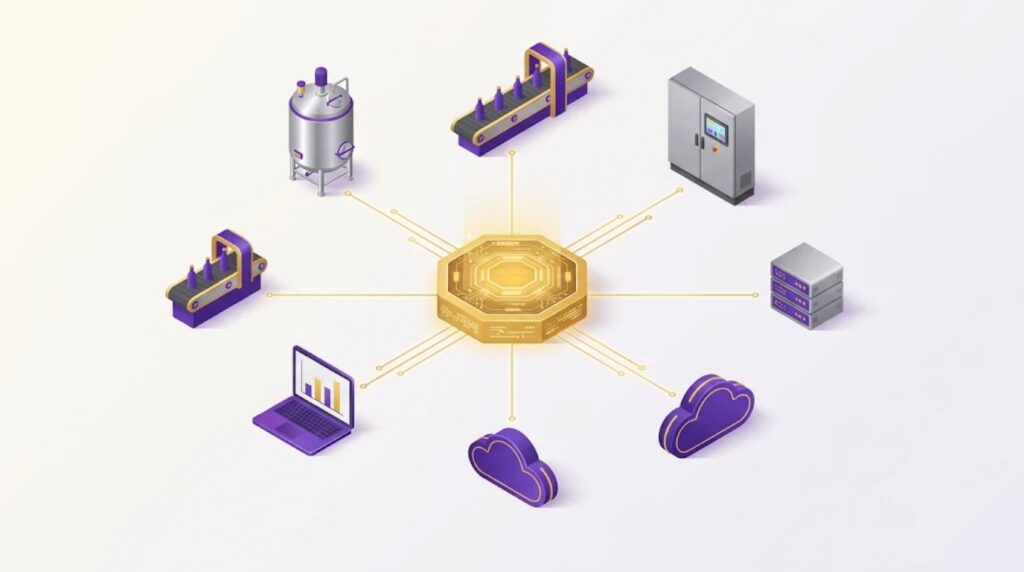
This is the part that surprises people. The controllers keep scanning, the drives are healthy, the I/O is fine, and nothing ships. Why? Because over the last decade a lot of plants quietly wired production to business systems. Recipes and work orders come down from ERP. Lot codes and labels come from a print server. HMI clients log in against the corporate domain. The SCADA server, historian and engineering workstations all live as virtual machines on a host that IT manages.
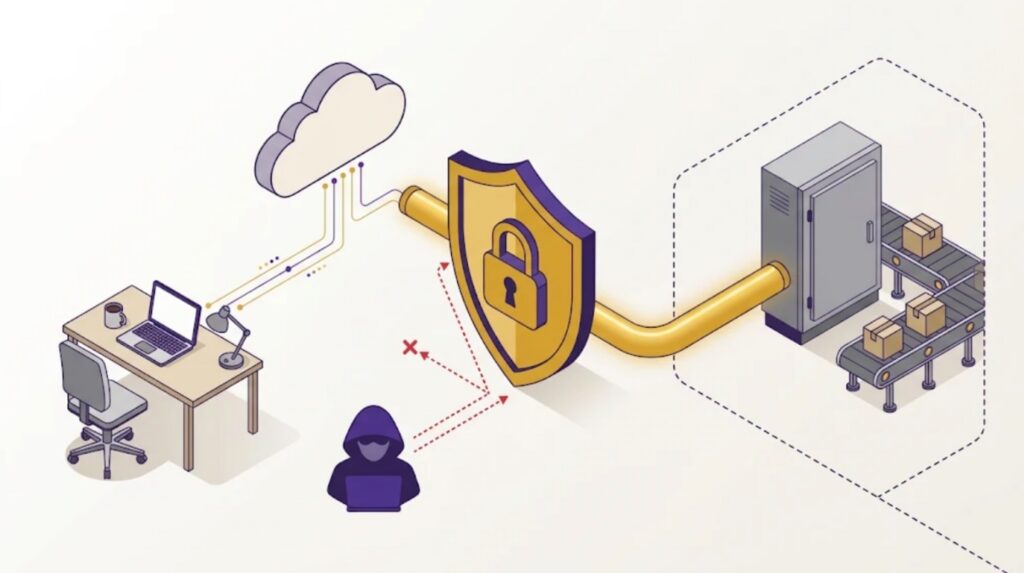
Dragos calls out exactly that pattern. According to the report, attackers exploited the management software for virtualization hosts, the same hosts that in many plants run the historian, HMI servers and engineering workstations, and in one case encrypted the hypervisor’s storage. Many got in through edge devices such as VPN gateways and firewalls, or with reused VPN credentials on accounts that had no multi-factor authentication. Once the hypervisor is encrypted, every OT server on it goes dark at once.
What to Check on Monday
None of this requires a big project to start. These are the steps we walk through with plant teams:
- Map what production actually needs from IT. Walk each line and list every outside dependency: recipe downloads, work orders, label and lot-code printing, domain logins on HMI clients, license servers, time sync, the historian. Anything on that list is a way for an office outage to become a plant outage.
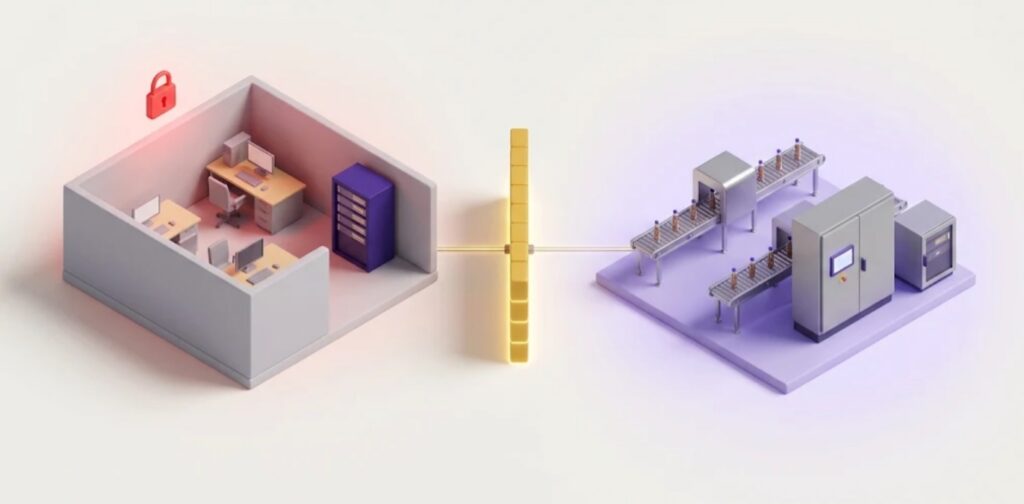
- Treat the OT virtualization host as OT. If your SCADA, historian and engineering VMs share a cluster or management console with corporate servers, separate them, or at minimum give the OT hosts their own management network and their own administrator accounts that are not in the corporate domain. The management interface should not be reachable from the office network.
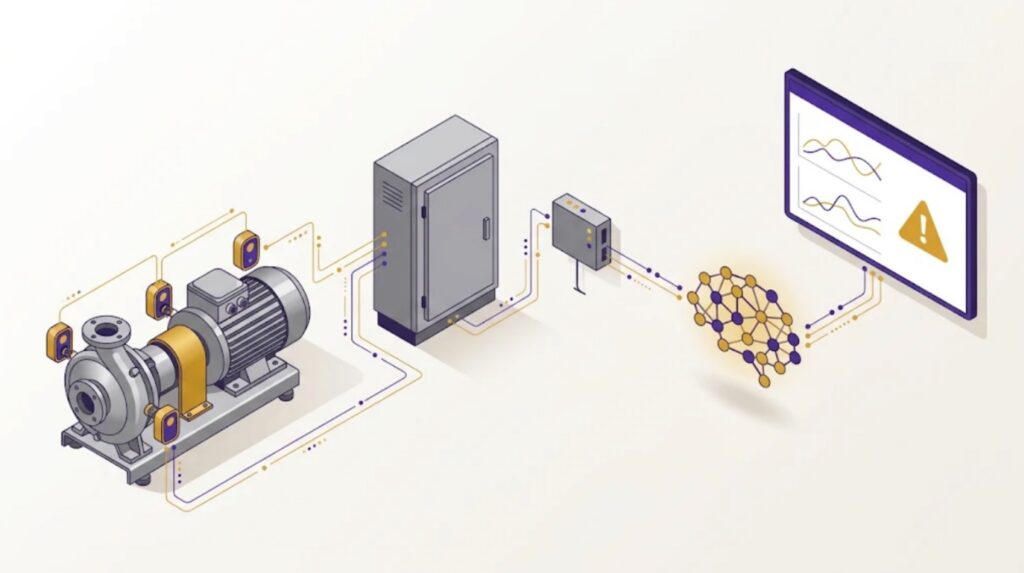
- Build a “run without IT” mode. Keep the current recipes cached in the PLC or HMI so the line can run if ERP is unreachable. Let the line generate lot codes and print labels locally. Configure historian collection to store and forward so data buffers at the edge instead of being lost. Then actually test it by pulling the uplink during a planned shutdown.
- Close the front door. Following Dragos’s recommendations: patch internet-facing firewalls and VPN appliances quickly, require multi-factor authentication on every remote connection, rotate administrator and VPN credentials, audit for admin accounts nobody on your team created, and lock down remote support tools so only approved ones can run.
- Keep restorable copies of the control layer. Store current PLC programs, HMI projects, drive parameters, switch configurations and VM images offline, where ransomware on the network cannot reach them. Practice a restore with operations and IT in the same room, and time it.
Design the Boundary on Purpose
The long-term fix is architectural. Production data should cross between the plant floor and the business network through a defined boundary, typically an industrial DMZ, where the plant pushes data out and the business side never needs a direct path into a controller or HMI. Dragos notes that a widely used software build server was exploited last quarter, and servers like it often sit in that IT/OT boundary zone. Anything living there needs the same patching and access discipline as the rest of the plant.
A good boundary also makes the “run without IT” mode natural rather than heroic. If the line only depends on a local SCADA system and a local recipe store, losing the corporate network becomes an inconvenience for accounting instead of a shutdown for production. That design choice is far cheaper to make during a controls upgrade or a new panel project than in the middle of an incident.
The Takeaway for Plant Teams
Dragos says ransomware “remained the most persistent and disruptive cyber threat” to industrial organizations last quarter. The encouraging news inside that report is that the damage came through dependencies plants can map, reduce and test, not through exotic attacks on controllers. Know what your lines need from the office network, make sure they can keep running without it, and be able to rebuild the control layer from your own backups.
How PCA can help
If you want help mapping those dependencies, segmenting your plant network or building local fallback into your next controls upgrade, our engineers do this work every day for food, beverage and agricultural processors across the Central Valley. Contact us