Secure Remote Access for Plant Controls: Convenience Without the Risk
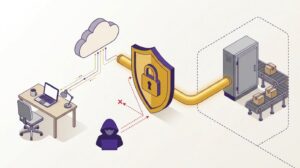
Remote support saves hours of downtime, but every connection is a door into your control system. Common weak spots and the practices

Artificial intelligence is everywhere in the headlines, and plenty of vendors now put “AI-powered” on their brochures. For a food or beverage processor, the real question is simpler: what can AI actually do on my plant floor today, and what do I need in place before it’s worth trying?
Predictive maintenance. Motors, pumps, fans and gearboxes usually give warning signs before they fail: rising current, vibration, temperature or run time between faults. AI models are good at spotting those patterns across many machines at once, so a failing motor shows up on a dashboard weeks before it stops a line.
Vision inspection. Camera systems with AI can check fill levels, caps, labels, seals and product appearance at line speed. They learn from examples instead of rigid rules, which helps with natural products that never look exactly the same twice.
Anomaly detection. Instead of setting a fixed alarm limit on every tag, AI can learn what “normal” looks like for a process and flag the unusual: a CIP circuit that takes longer to reach temperature, a tank that fills a little slower each week, or a compressor that cycles more than it should.
Troubleshooting help. AI assistants can search manuals, alarm histories and past work orders to suggest likely causes when something goes wrong, which is especially valuable when your most experienced technician isn’t on shift.
Every one of these uses depends on the same thing: reliable, well-organized data from the plant floor. AI can’t predict a motor failure if nobody is collecting motor current, and it can’t learn “normal” from a process that’s run on manual switches and paper logs. In practice, the best first steps toward AI are controls projects:
AI should advise, not take control of safety-critical equipment. The safest pattern today is for AI to raise a flag or suggest an action, while the PLC logic, interlocks and safety systems stay exactly as engineered and tested. That gives you the benefit of earlier warnings without adding risk to your process.
Pacific Coast Automation builds the controls, networks and SCADA systems that make plant data reliable, which is the foundation every AI project needs. If you’re curious what AI could do for your operation, let’s talk about where your data stands today.
Remote support saves hours of downtime, but every connection is a door into your control system. Common weak spots and the practices
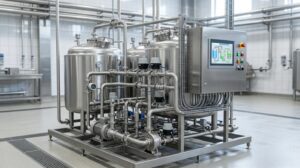
Why automated CIP controls deliver more consistent cleaning, audit-ready records, and lower water and chemical use in food and beverage plants.
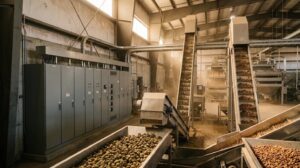
How sequenced controls, VFDs and plant-wide SCADA help Central Valley almond and walnut hulling and shelling facilities avoid downtime during harvest.