
Nut Processing Automation: Hulling & Shelling
A hulling and shelling plant has a few months to process a year’s crop. When a conveyor, elevator or huller goes down during harvest, product backs up all the way to the trucks. Pacific Coast Automation designs and builds the control systems that keep almond hulling and shelling plants running. Our shop is in Modesto, in the middle of California’s almond country.
What we automate in nut processing plants
- Receiving and precleaning: pit and hopper controls, conveyors, precleaners, stick and rock removal.
- Hulling and shelling: huller and sheller motor control, feed rate control with VFDs, and separation and aspiration.
- Conveying and elevators: start and stop sequencing, zero-speed and plug detection, and interlocks that stop upstream equipment before a pile-up.
- Sorting and stockpiling: controls integration with sorters, bin and stockpile conveyors.
- Dust collection: baghouse and fan controls with pulse cleaning and differential pressure monitoring.
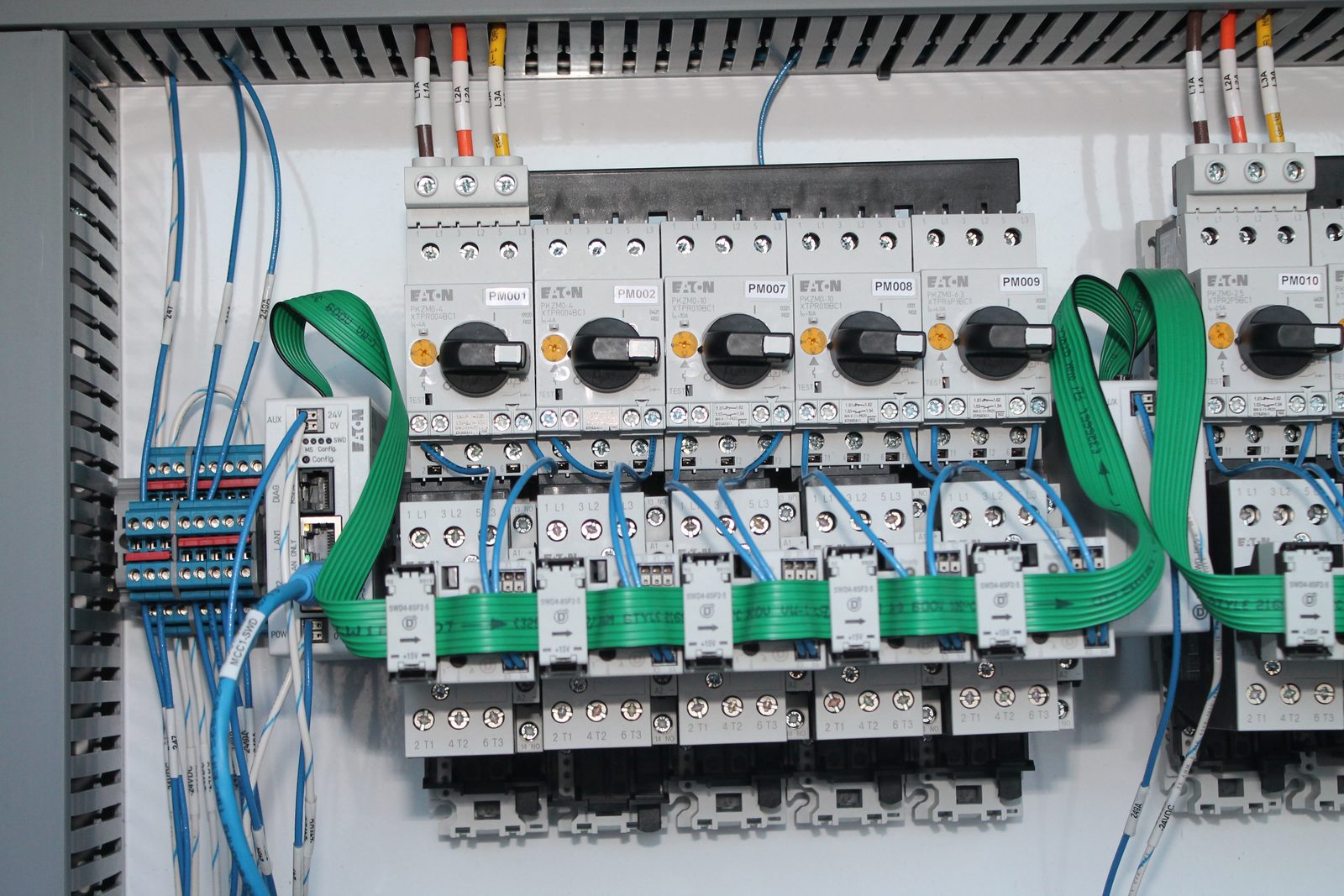
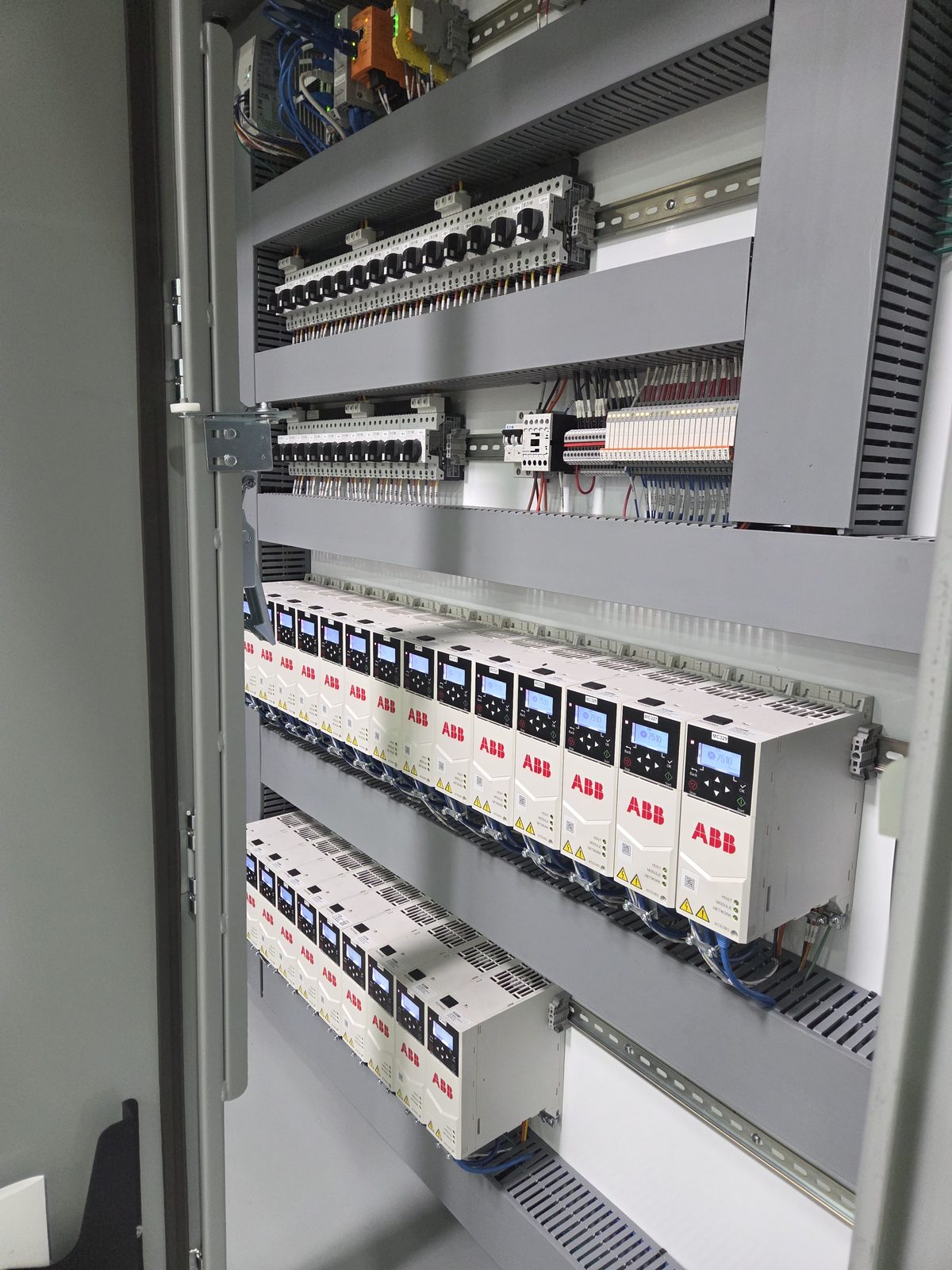
- Power distribution and motor control: motor control centers, VFD panels and networked motor starters.
Plant-wide motor control that saves floor space and downtime
Many older hulling plants still run on bucket-style starters with individual hand-off-auto switches and hardwired interlocks. Replacing them with compact motor control centers that use networked starters and Ethernet-connected VFDs brings big gains:
- One PLC sequences the whole plant, starting lines in order and shutting down upstream equipment automatically on a fault.
- Motor current for every motor is available on the network, so high-amp warnings can catch a plugging conveyor or a failing bearing before it trips.
- Fewer control wires and terminations, faster troubleshooting, and smaller panels.
- Operators see the whole plant on HMI and SCADA screens instead of walking the floor.
Read how we did this in our almond hulling and shelling facility case study, and see our overview of hulling and shelling automation.
Ready before harvest
The best time to fix controls is before the first truck arrives. We help processors plan off-season upgrades in phases, commission new equipment, and prepare for harvest with documented programs, spare parts lists and secure remote access. That way a problem in the middle of the night can be diagnosed quickly. Read more in modern controls for hulling and shelling plants.
Data from the line
Throughput, run time, downtime causes, and energy per ton all become visible once the plant is networked. That data helps you find bottlenecks, plan maintenance, and build the history needed for predictive maintenance and other practical AI tools.
Almonds and beyond
Our experience is rooted in almond hulling and shelling. The same controls approach applies to walnut, pistachio and other tree nut and agricultural processing operations across the Central Valley, as well as to the processing and packing plants downstream.
Talk to a controls engineer
Tell us about your plant, your process and what is holding it back. We will help you figure out the right next step, whether that is one new control panel or a plant-wide upgrade. Request a control panel quote, send us a message or call (877) 655-8251.
Pacific Coast Automation, Inc. · 513 Glass Lane, Suite 1B, Modesto, CA 95356 · (877) 655-8251